

No products in the cart.
Car Seat Safety
Common Baby Car Seat Installation Mistakes

🛡️
ACRI Accredited
Professional fitting included
🔧
Mobile Service
We come to you
📊
24,000+ Fittings
Since 2012
✅
Safety First
Correct installation saves lives
Why Professional Fitting Matters
Research shows that incorrect installation increases the risk of serious injury by up to 70%. Don’t take the chance with your child’s safety.
Child restraints are the safest way to ensure your baby is secure and comfortable in the car. However, many parents attempt to fit the seat themselves, often resulting in common baby car seat installation mistakes and incorrect setups.
“Safety first” is “safety always.” So get the best car seat that is easy to use, because your child’s safety is the most important cargo you will ever carry in your car.
Many safety issues arise from common baby car seat installation mistakes made during setup. To ensure your child’s safety, parents and guardians should engage a professional and accredited mobile car seat fitting expert to visit their home or workplace and ensure all restraints are installed correctly by a specialist.
Child restraints are the safest way to ensure your baby is secure and comfortable in the car. However, many parents attempt to fit the seat themselves, often resulting in common baby car seat installation mistakes and incorrect setups.
“Safety first” is “safety always.”
Your child’s safety is the most important cargo you will ever carry in your car.
Many safety issues arise from common installation mistakes made during setup. To ensure your child’s safety, we strongly recommend engaging a professional and ACRI-accredited mobile car seat fitting expert to visit your home or workplace and install all restraints correctly.
Common Baby Car Seat Installation Mistakes
These are the most frequent errors we see — and how to avoid them.

Loose Harness
One of the most dangerous mistakes. The harness must be snug — you should not be able to pinch any slack between your fingers.
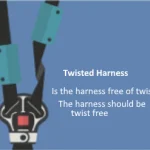
Twisted Harness Straps
Twisted straps reduce the effectiveness of the harness in a crash. Always check and fully loosen the harness when removing your child.
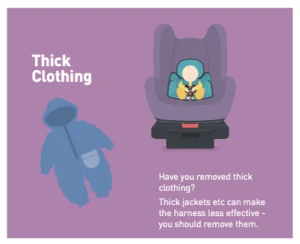
Bulky Clothing Under Harness
Jackets, hoodies and thick winter clothes create gaps. Remove bulky layers before buckling up so the harness sits directly against the child.
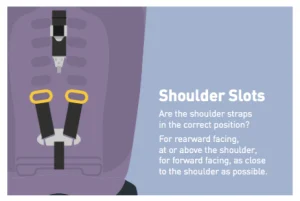
Incorrect Harness Height
Harness slots must be at or below the child’s shoulders in rear-facing mode and at or above in forward-facing mode.
Wrong Recline Angle
Most capsules and rear-facing seats must be installed at the correct angle. Too upright or too flat can compromise safety and comfort.
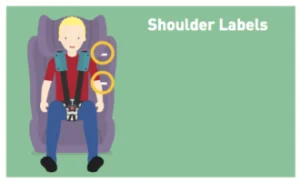
Incorrect Shoulder Height Markers
If your child’s shoulders are within the correct range, they should be above the first shoulder marker and below the second shoulder height marker to be forward facing.
How to Check the Correct Recline Angle
Getting the recline angle right is critical for newborn and rear-facing safety. Too upright can cause the baby’s head to flop forward. Too flat can reduce protection in a crash.
Quick Recline Angle Checks
- 1. Most capsules have a built-in level indicator (bubble or line). Make sure it sits in the correct zone when installed.
- 2. The baby’s head should rest comfortably against the back of the seat, not flopping forward.
- 3. The angle should be approximately 30–45 degrees from vertical for newborns.
- 4. Use the adjustable foot or wedge provided with the seat if your car seat is very deep.
Handy Phone Tip
Apple users: Open the Compass app and place your phone on the back of the car seat to check the angle.
Android users: Download a free angle meter app from the Play Store.
Example: B-Pod angle meter showing correct recline position
Common Booster Seat Installation Mistakes
Using a Booster Too Early
Children must be at least 4 years old before they can safely use the adult seat belt without a booster.
Lap Belt on Stomach
The lap belt must sit low across the hips (on the pelvic bones), not on the soft stomach area. This is one of the most common and dangerous errors.
Shoulder Belt Behind Back or Under Arm
The shoulder belt must go across the middle of the shoulder and chest. Routing it behind the back or under the arm significantly increases injury risk.
No Anti-Submarine Clip or Pummelling
Use a booster seat that has pummelling or an anti-submarine clip. This prevents the child sliding under the lap section of the seat belt in a crash.
Incorrect Lap Sash Guide & Headrest Position
You must use the lap sash guide to position the sash correctly. The headrest must be adjusted so the sash is over the middle of the shoulder.
Child Movement & Missing Anchor Point
The child must not dance or move around in a lap sash booster seat. Booster seats still use an anchor point and it must be attached.
Australian Car Seat Laws & Safety Standards
Australia has some of the strictest child restraint laws in the world.
The table below shows the legal minimum versus the professional safety recommendation.
| Child Age / Stage | Legal Requirement (Victoria) | Recommended Best Practice |
|---|---|---|
| 0 – 6 months | Rear-facing capsule or rear-facing car seat only | Rear-facing capsule or rear-facing car seat |
| 6 months – 4 years | Rear-facing OR forward-facing with harness | Stay rear-facing as long as possible (until at least 14 months and ideally up to 30 months or the seat’s maximum limit) |
| 4 – 7 years | Forward-facing harnessed seat OR booster seat with lap-sash belt | Use a booster seat with lap-sash belt until the child reaches 145 cm tall (usually around 8–10 years old) |
| 7 years and older | Adult seat belt only (once 145 cm tall) | Continue using a booster seat until the child is 145 cm tall and can pass the 5-step safety test |
Professional Car Seat Fitting
🛡️
ACRI Accredited Technician
Anthony is a fully qualified, ACRI-accredited child restraint fitting technician with over 24,000 installations completed.
🏠
Mobile Service
We come to your home, workplace, or any convenient location across Melbourne. No need to transport seats.
📋
Full Demonstration
We don’t just fit the seat — we take the time to show you how to use it correctly every single time.
🔧
All Types of Restraints
Capsules, rear-facing seats, forward-facing seats, boosters, and convertible car seats — we fit them all correctly.
❓
All Your Questions Answered
We have been fitting car seats for years, so we understand all baby seats, the standards, and the laws in Victoria. We can answer every question you have.
Meet Anthony – Founder of TravelSafe
Anthony is the founder of TravelSafe Baby Capsule Hire. Since 2012 he has worked full-time as a mobile child restraint technician, professionally installing thousands of baby capsules, convertible car seats, boosters and harnessed seats in every type of vehicle — cars, SUVs, dual cabs and minivans.
What began as a specialist baby car seat fitting service has grown into a trusted Melbourne business offering premium baby capsule hire, car seat hire, and fully accredited professional fitting services.
What Melbourne Parents Say
Real experiences from families who trusted TravelSafe with their baby capsule hire.
★★★★★
“Anthony was so thorough, professional and thoughtful.
He gave us all the confidence we needed to know our newborn was safe.”


Tony Rossi
June 5, 2026
This service is first class. Anthony was so helpful, he fitted our car seat perfectly- it was just brilliant for our new 6 month granddaughter on her first visit to Melbourne with her parents. Gave us full confidence to show the family the region. Also saved us having to buy a car seat that might have been used a handful of times at best. Once we were finished it was picked up on schedule and the pricing structure is very competitive. I recommend Brighton Baby Capsule Hire unreservedly.

Albertus Yudhistira
June 3, 2026
Thanks Anthony, the capsule was clean and in perfect condition. Would highly recommend hiring from here. Renting a capsule is better than buying a new one


Pia-Ariel Foerster
May 25, 2026
Anthony was amazing! So easy to communicate with, very high quality and safe seats that the kids were so comfortable in and affordable prices! We will definitely be using this service again! Thanks for making our vacation so smooth 🙂

Kirstin Finlayson
May 21, 2026
Anthony was great! He is Reassuring and focused on your child’s safety and needs first and foremost As a first time mum he made the process and installation a breeze Highly recommended Kirstin

Sarah Bowden
April 17, 2026
Anthony was fantastic. We needed a car seat for my friend’s baby who was visiting for just over a week, and he made the whole process so easy, dropping it off, installing it properly, and then picking it up afterwards. He was incredibly kind and helpful the entire time. I couldn’t recommend him more highly.

Moonlit Magnolia
December 4, 2025
Thank you! What a great service. The installation was quick and seamless, and Anthony was extremely informative in showing me exactly how to use the capsule. He was punctual, on time, and such a friendly guy. I wouldn’t hesitate to use this service again. Highly recommend!

Toby Parmenter
November 4, 2025
Great service, highly recommend for any new parents. Everything is done for you. Anthony is very helpful

Sarah Craig
October 28, 2025
We have used this service twice.Anthony was punctual on delivery and collection of the capsule. Installation was safe, secure and efficient. Upon collection I was able to organise for Anthony to move my older child’s seat to the other side of the back seat and changed to reverse facing for my baby and a new seat was installed for my toddler, all in line with safety requirements, this was done very well. We highly recommend this service!

Lakshmi Neelakantan
June 21, 2025
Excellent service! We rented a Maxi Cosi baby capsule from Brighton Baby Capsule and it was sturdy and in great condition. The installation and practical support from Anthony was excellent. Seamless use for 6 months and the value for money was great too. Highly recommend.
Book Your Baby Seat Installation
Frequently Asked Questions – Baby Car Seat Installation
Why is correct car seat installation so important? ›
Incorrect installation is the #1 reason child restraints fail in a crash. Even a small mistake can reduce the seat’s effectiveness by up to 80%.
How tight should the harness be? ›
You should not be able to pinch any slack in the harness straps between your fingers. The harness must be snug but comfortable.
What is the correct recline angle for a baby capsule? ›
Most capsules need to be installed at 30–45 degrees from vertical. Use the built-in level indicator or the Compass app (Apple) / angle meter app (Android).
When can my child move out of a booster seat? ›
When they reach approximately 145 cm tall (usually around 8–10 years old) and can pass the 5-step safety test.
Do booster seats still need the top tether / anchor point? ›
Yes. All booster seats with a back must be attached to the vehicle’s top tether anchor point.
What should I do if the seat belt is twisted? ›
Fully loosen the harness or belt, untwist it, and re-tighten. Twisted straps reduce protection in a crash.
Don’t Risk Incorrect Installation
Let Anthony professionally fit and demonstrate your car seat today.
Call 0466 997 233 NowFrequently Asked Questions – common baby car seat installation mistakes
What are the most common baby car seat installation mistakes? ›
The most common mistakes are loose harness, incorrect recline angle, twisted straps, wrong harness height, and not using the top tether.
How tight should the harness be? ›
You should not be able to pinch any slack in the harness straps between your fingers. The harness must be snug but comfortable.
Why is a loose harness dangerous? ›
In a crash, a loose harness allows the child to move too far forward, increasing the risk of serious injury.
What is the correct recline angle for a baby capsule? ›
Most capsules need to be installed at 30–45 degrees from vertical. Use the built-in level indicator or the Compass app (Apple) / angle meter app (Android).
What should I do if the seat belt is twisted? ›
Fully loosen the harness or belt, untwist it, and re-tighten. Twisted straps reduce protection in a crash.
Do I need to use the top tether with every installation? ›
Yes. The top tether is mandatory in Australia and significantly reduces forward movement in a crash.
Do booster seats still need the top tether / anchor point? ›
Yes. All booster seats with a back must be attached to the vehicle’s top tether anchor point. The exception is when an untethered booster seat weighing less than 2.5kg is used.
When can my child move out of a booster seat? ›
When they reach approximately 145 cm tall (usually around 8–10 years old) and can pass the 5-step safety test.
How do I know if my car seat is installed correctly? ›
The seat should not move more than 2.5 cm at the base, the harness should be snug, the recline angle correct, and the top tether tight.
Should I get a professional fitting instead of doing it myself? ›
Yes. Professional installation by an ACRI-accredited technician is the safest option and greatly reduces the risk of mistakes.